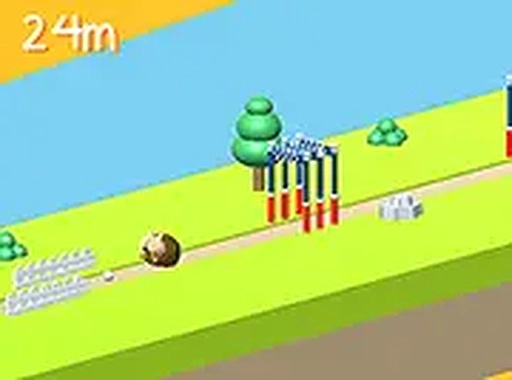
Plushie Roll Arcade Challenge
Review
Plushie Roll Arcade Challenge strips the arcade formula down to steering and reaction time. Random trap placement prevents memorization, so improvement comes from sharper reflexes and calmer decision-making. The desktop-only browser format and one-hit runs suit short breaks, while the rising score gives dedicated players a reason to keep trying. Its main limitation is a narrow mechanic set: if you want variety or progression beyond a high score, this game does not offer it.
About This Game
Steering a Plushie Through Random Hazards
Plushie Roll Arcade Challenge is a browser-based arcade game built around one clear task: keep a soft plushie character rolling without touching any trap. You control lateral movement, steering left or right with either the mouse or keyboard. The game begins on its own, so there is no setup screen or tutorial to work through before your first run. Traps appear unpredictably along the path, which means you cannot memorize a fixed sequence. Every run ends the instant you contact an obstacle, and your score reflects how long you survived.

Why Random Traps Change How You Play
Because trap placement is random, success depends on reaction speed rather than route memory. You watch the path ahead, judge when a small adjustment is enough, and avoid over-steering. Precise, short movements tend to keep the plushie centered and leave more room to correct. The scoring system rewards longer survival, so the pressure builds naturally the further you go. This design makes each session different and gives the game replay value beyond a single high score.
Controls, Platform, and Who It Suits
The game is designed for desktop use and runs in the browser without downloads. Mouse and keyboard are both supported, and the controls are responsive enough for quick corrections. Its bright visuals and simple premise make it appropriate for family play and for players of any age who want a short, positive challenge. Sessions can last a few minutes or much longer depending on how well you react. The difficulty comes from timing and concentration, not from complex rules, so newcomers can start immediately while experienced players chase longer runs.
Approaches That Tend to Work
Staying calm and keeping your eyes on the path ahead helps more than reacting late. Small, controlled movements usually beat large swerves because they keep the plushie stable. Regular practice improves anticipation of where traps tend to appear, even though the exact layout changes. Taking a short break when frustration builds can restore the concentration needed for a clean run. Early failures are normal, and each attempt is a fresh start that gives you another chance to refine your timing.



💬 Comments
0 comments