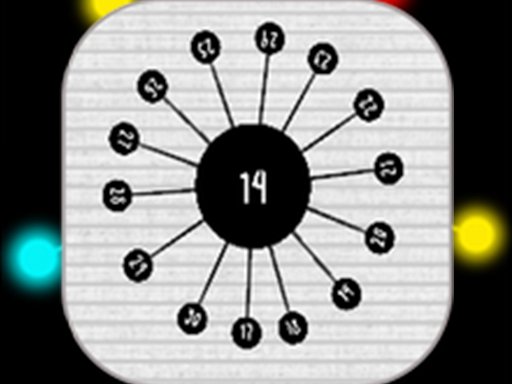
Circle Placement Puzzle
Review
Circle Placement Puzzle offers a narrow but well-defined challenge: place balls on a rotating wheel without collisions. The difficulty comes from two sources: the wheel's speed changes, and the ball count rises toward 100. That combination forces you to read the rotation before every launch. The green-and-red feedback keeps outcomes clear. It suits players who enjoy short, repeatable precision tasks rather than progression systems or narrative. The main limitation is a lack of confirmed features beyond the core loop, such as scoring or leaderboards.
About This Game
The Core Timing Challenge
Circle Placement Puzzle strips away distractions, leaving only a rotating wheel and a stack of balls. Your task is to launch each ball onto the wheel without touching any ball already placed. The wheel's speed shifts between fast and slow, so you cannot rely on a single rhythm. Each successful placement crowds the wheel further, shrinking the safe gaps. A collision turns the screen red and ends the run immediately. Clear the entire stack and the screen turns green, marking victory.
Progression and Difficulty
The game begins with a modest number of balls, but the count climbs as high as 100. That increase is the main difficulty curve: more balls mean fewer open spaces and a greater chance of mistiming a launch. Because the wheel's speed can change mid-session, you must read the rotation before every tap or click. The combination of a growing ball count and variable speed keeps later attempts tense without adding new rules or controls.
Visual Feedback and Session Length
Feedback is binary and immediate: green for a full clear, red for a collision. There are no timers, scores, or meters visible during play, so your attention stays on the wheel. A single run can last less than a minute or stretch longer as you approach 100 balls. That makes the game suitable for quick breaks or repeated practice sessions. The minimalist design ensures that every mistake is your own timing error, not a hidden mechanic.








💬 Comments
0 comments