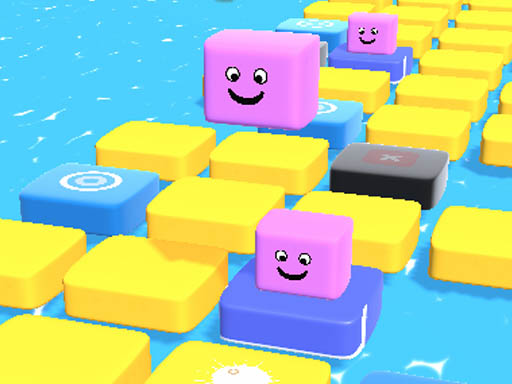
Stack Builder 3D Puzzle
Review
Stack Builder 3D Puzzle keeps its scope narrow: slide a moving stack, land it on platforms, and avoid black tiles and water. That simplicity is its main strength, because the challenge comes from timing rather than complex rules. The 3D visuals are bright and non-violent, making it appropriate for younger players and casual audiences. Its limitation is variety—players seeking deep progression systems or multiple modes will find the experience repetitive. As a quick reflex puzzle, it works well in short bursts.
About This Game
Sliding and Stacking Mechanics
Stack Builder 3D Puzzle is a casual arcade game built around a single, repeatable action: sliding a moving stack left or right to align it with the next platform. The stack is always in motion, and your job is to time each slide so the stack lands cleanly on the platform below. A successful landing adds height; a mistimed one ends the run. This loop is simple to grasp but demands steady attention, because the stack never waits for you to decide.
Obstacles and Timing Pressure
Early platforms are straightforward, but the game introduces black tiles and water as you progress. Touching either one immediately ends your attempt, so you must read the platform layout before the stack reaches it. Black tiles and water are not decorative—they force you to plan your slides a beat ahead rather than react at the last moment. The result is a light reflex challenge layered with a small amount of forward planning.
Level Goals and Progression
Each level displays a target height. Reaching that height unlocks the next level, and later stages combine faster movement with more frequent hazards. Because the goal is always visible, you know exactly how much stacking remains. There are no hidden objectives or score multipliers to track—just the stack, the platform, and the height marker. This clarity keeps the game approachable for short sessions while still giving experienced players a reason to retry for a cleaner run.
Controls and Family-Friendly Design
Controls are limited to sliding with a mouse or finger, which makes the game usable on both desktop and touchscreen devices. The 3D visuals use bright colors and simple shapes, and the content is non-violent throughout. That combination suits younger players and anyone looking for a low-pressure puzzle game. Sessions can last a few minutes or longer, depending on how many attempts you make, and the difficulty curve grows gradually rather than spiking suddenly.







💬 Comments
0 comments