
Mind Challenge 3D Puzzle
Review
Mind Challenge 3D Puzzle stands out for its no-pressure design: without timers or fail states, it invites careful thinking rather than reflex. The mix of over ten mini games—covering logic, painting, balancing, and more—keeps sessions varied, while the 3D laboratory setting and duck-led experiments give it a playful identity. It suits families and casual players seeking light mental exercise, though those wanting deep progression or competitive challenge may find it too gentle.
About This Game
A Laboratory of Mini Games
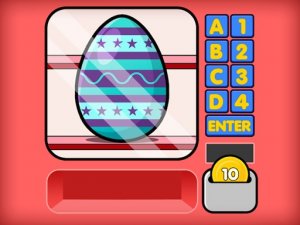
Mind Challenge 3D Puzzle gathers more than ten distinct brain-training activities inside a colorful 3D laboratory. A quirky interdimensional duck runs the show, using a character named Bob as the test subject. Each mini game examines a different ability, such as strength, sight, or problem-solving, giving the collection a clear structure: every task is framed as an experiment. The variety means you switch between logic puzzles, painting, balancing, and other challenges rather than repeating one mechanic. That rotation keeps sessions fresh and prevents any single skill from becoming stale.
Playing at Your Own Pace
You start by picking a mini game from the main menu, and each one opens with short, easy-to-follow instructions. Controls rely on a mouse or touch screen, so you interact directly with objects: solving puzzles, rescuing characters, or completing tasks like painting and balancing. There are no time limits, which changes how you approach each challenge. Instead of rushing, you can study the board, test an idea, and adjust. The game rewards quick thinking and creativity, but it never punishes you for pausing to think. Progress unlocks new games and gradually raises the difficulty, so the challenge grows only as you are ready.
Design and Audience
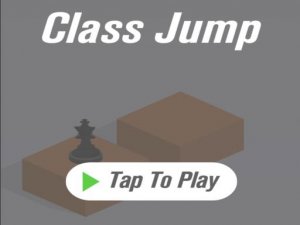
The 3D graphics are bright and playful, and the cast of characters keeps the tone light. Because the experiments avoid pressure and failure states, the experience suits both kids and adults. Parents looking for a shared activity will find the content family-friendly, while adults wanting a low-stress mental workout can treat each mini game as a short daily exercise. The absence of timers also makes it accessible for players who prefer to think before acting. [IMG_1]
Approaches That Help
Because every mini game has its own logic, the most reliable strategy is to read the instructions carefully before touching anything. They often contain the key hint. Since there is no clock, take a moment to experiment with different approaches and see what the game accepts. Focusing on one mini game until its mechanics feel familiar tends to work better than jumping between several at once. Finally, treat mistakes as information: the game is built for relaxed repetition, so a wrong move costs nothing but a few seconds.



💬 Comments
0 comments