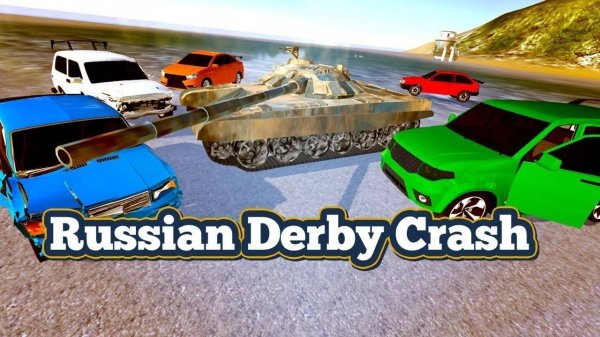
Steel Bumper Clash
Review
Steel Bumper Clash is a physics-driven arena game that rewards careful positioning over reckless contact. Vehicle weight and momentum determine the outcome of every push, and the garage progression encourages experimenting with different handling profiles. The lack of obstacles or power-ups keeps matches pure and skill-based. Short round lengths and simple controls make it easy to pick up, though players seeking track variety or complex customization may find the scope limited. Best suited to those who enjoy competitive driving challenges with a low barrier to entry.
About This Game
Open Arena, No Obstacles
Every match takes place in a wide-open space with no track boundaries, walls, or power-ups. That absence is deliberate: with nothing to hide behind, the outcome depends entirely on how you read other drivers' movements and position your own car. You can accelerate, brake, and steer freely, but there is no shortcut to victory beyond clean driving.
Vehicle Choice and Handling
Before each session you select from a set of cars that differ in handling and durability. Weight distribution and turning radius vary noticeably, so a car that feels responsive in tight maneuvers may struggle to hold a line at speed. Lighter vehicles demand more careful timing because they carry less momentum into a push, while heavier ones can transfer force more directly but often turn less sharply. Matching a car to your preferred driving style is the first real decision of any round.
Scoring Through Momentum
Points come from how effectively you influence other cars, not from simple contact. A well-timed maneuver that sends an opponent off course or forces a direction change scores higher than a glancing bump. The physics engine calculates momentum and weight in real time, so the same hit produces different results depending on speed, angle, and vehicle mass. This rewards patience and observation over reckless charging.
Progression and Garage Unlocks
As you accumulate points, additional cars become available in the garage. Each new vehicle introduces a different weight distribution or turning radius, which opens up alternative strategies. Some accelerate quickly but handle poorly at high speed; others offer steady control at the cost of top speed. The loop encourages experimenting with different driving techniques rather than sticking to one car.
Short Sessions, Simple Controls
Rounds are designed to be completed in a short time frame, which suits quick breaks or casual play. The controls are limited to acceleration, braking, and steering, so new players can start without reading lengthy tutorials. Experienced drivers can instead focus on perfecting timing and positioning. The arena uses clear, bright visuals with distinct car colors and shapes, and audio cues differentiate light contact from heavy pushes.

💬 Comments
0 comments