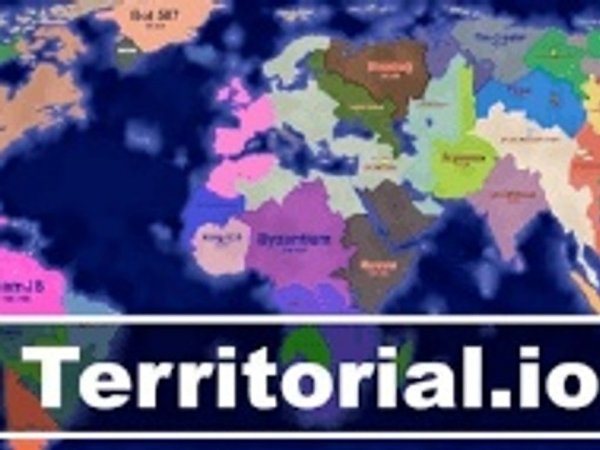
Territorial Expansion Strategy
Review
Territorial Expansion Strategy appeals to players who enjoy short, competitive matches built on map awareness and resource discipline. Its strengths lie in the tension between expanding quickly and keeping borders strong, plus the unpredictability of non-binding alliances. The game is accessible to all ages, though the depth comes from timing and observation rather than complex rules. The main limitation is that the input describes no single-player mode, so solo players may find little here.
About This Game
Claiming Land and Managing Population
Every match in Territorial Expansion Strategy begins with a single decision: where to place your spawn point. That choice shapes your early options, because your population is the resource that fuels all growth. To expand, you send units out from your territory to claim adjacent neutral areas. Each claim costs population, so the pace of expansion is tied directly to how well you manage that resource. Overextending leaves your borders thin and vulnerable, while expanding too slowly hands map control to rivals.
Attacking, Defending, and Alliances
Combat is a matter of sustained pressure rather than single decisive strikes. To take land from another player, you weaken their borders by sending a continuous stream of units against them. Defense works the same way in reverse: you pull units back to reinforce your own borders before they break. The game also allows non-binding alliances, formed simply by choosing not to attack a shared border. These agreements are informal and can shift at any moment, which keeps the political landscape of each match unpredictable.
Match Structure and Map Variety
Matches are session-based and short, designed for quick play sessions rather than long campaigns. The game includes multiple world maps and custom maps, so the geography changes from one match to the next. No two games play out the same because alliances shift and threats evolve as players react to each other in real time. The objective stays constant: control the entire map or be the last nation standing when time runs out.
Reading the Map and Timing Your Moves
Success depends on timing and observation. A well-placed spawn point can give you an early advantage, but that advantage disappears if you ignore what other players are doing. Watching their movements helps you decide when to push, when to fortify, and when a temporary alliance makes sense to counter a common threat. The game is accessible to players of all ages, yet the interaction between expansion speed, border strength, and shifting alliances provides a satisfying challenge for anyone who enjoys tactical decision-making.








💬 Comments
0 comments