Settlement & Strategy: Retro Pixel RTS
Review
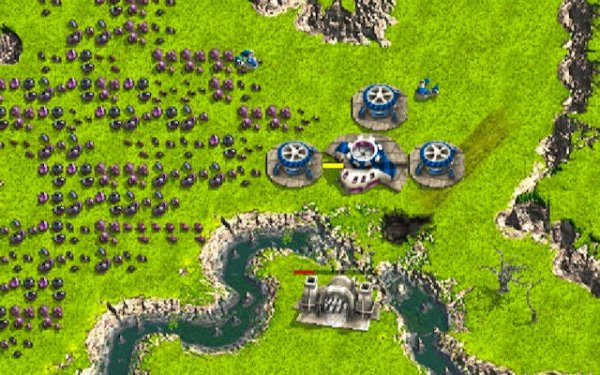
Settlement & Strategy: Retro Pixel RTS successfully captures the essence of classic real-time strategy. Its streamlined design removes unnecessary complexity, letting players focus on the core loop of building, gathering, and tactical combat. The pixel art is clean and functional, making it easy to read the battlefield. The AI provides a solid challenge across difficulty levels. While it lacks a campaign mode, the replayability comes from experimenting with different strategies and upgrade paths. It is a satisfying choice for anyone seeking a pure RTS experience.
About This Game
Core Loop: Build, Gather, Expand
The heart of this game lies in a satisfying cycle of construction and growth. Players begin by placing a central hub, which serves as the command center for all future expansion. From there, the focus shifts to securing nearby resource deposits. Wood, stone, and food are essential for constructing new buildings and training units. Balancing the rate of gathering against the cost of new structures is a constant puzzle. Each decision to build a barracks or a farm has immediate consequences for the settlement's development. The pixel art style makes each building and resource node distinct, helping players quickly assess their situation at a glance.
Unit Roles & Tactical Deployment
Victory depends on assembling a diverse army and using each unit type effectively. Some units are designed for direct confrontation, while others excel at ranged support or scouting. The game encourages players to experiment with different compositions to find what works against various defensive setups. Positioning matters: placing ranged units behind a frontline of sturdier troops can turn the tide of a skirmish. Players must also consider the terrain, as chokepoints and elevated ground offer strategic advantages. This layer of tactical depth ensures that battles are about more than just having a larger force.
Economy & Upgrade Paths
Managing the settlement's economy is a continuous challenge. Players must decide whether to invest in more gathering structures to fuel rapid expansion or to construct defensive walls and towers for protection. A research system allows for upgrades that improve unit strength, building durability, or resource efficiency. Choosing which upgrades to prioritize can define a player's overall strategy. For example, focusing on economic upgrades early can lead to a powerful late-game army, but leaves the base vulnerable to early pressure. This trade-off creates meaningful choices throughout each match.
Map Awareness & Adaptation
Success requires more than just a solid plan; players must constantly adapt to new information. Scouting the map reveals the opponent's base layout, resource access, and army composition. This intelligence allows players to adjust their own strategy, perhaps shifting from a defensive posture to a surprise attack. The fog of war adds an element of uncertainty, rewarding those who maintain good map awareness. Learning to read the opponent's intentions and respond accordingly is a skill that develops over many games, making each encounter feel fresh and challenging.


💬 Comments
0 comments