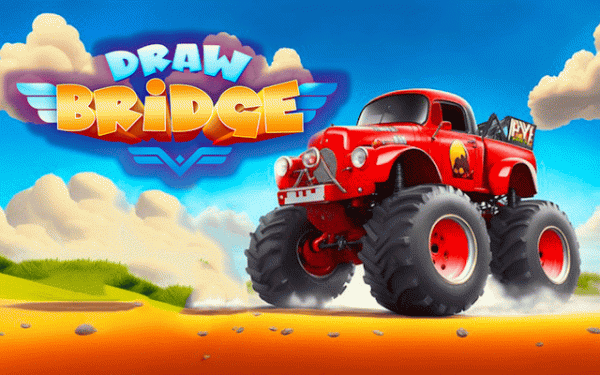
Road Design Logic Puzzle
Review
Road Design Logic Puzzle stands out by making you responsible for both the road and the drive. The planning phase rewards structural thinking, while the driving phase tests patience and control. Terrain shifts from dirt gaps to slopes and water crossings, so no single design approach works everywhere. The gentle early difficulty makes it accessible, though later stages demand creative solutions. Best for players who enjoy physics puzzles and careful, deliberate driving rather than high-speed action.
About This Game
Planning Phase Meets Driving Phase
Road Design Logic Puzzle splits each stage into two distinct phases. First, you enter a planning mode where you sketch a route connecting two points separated by a gap. The drawn path must be stable enough to support the weight of a heavy vehicle. Once the route is set, the game shifts to a driving segment where you control the hauler across the newly built pathway. Success depends on both the quality of the design and the precision of the driving.
Terrain Changes Demand New Approaches
Environments change as you advance. Early stages may present simple dirt gaps, while later areas include steep inclines, narrow passages, and sections that cross water. Each type of terrain demands a different approach to route design. A path that works on flat ground may collapse under the stress of a slope. Before drawing, you must study the layout and consider both the shape of the route and the materials available for construction.
Driving a Self-Built Route
Driving the hauler across a self-built route requires a steady hand. The vehicle responds to acceleration and steering inputs, and maintaining balance is key. Rushing across a newly built section can cause the structure to fail. You learn to modulate speed and make small corrections to stay on course. The hauler itself may have different characteristics depending on the stage, adding variety to the driving experience.
Progression and Visual Feedback
Completing each stage unlocks the next area and sometimes introduces new vehicles or construction materials. This gradual unlocking system gives players a clear sense of advancement. The difficulty curve is gentle at first, allowing newcomers to learn the basics of route design and vehicle control. Later stages require more creative solutions and precise driving. The game uses three-dimensional graphics to present its environments. Rocky cliffs, flowing rivers, and open fields are rendered with enough detail to make each location feel distinct. Visual feedback during construction and driving helps players understand how their choices affect the stability of the route.






💬 Comments
0 comments